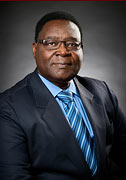
 Professor Saliah-Hassane is a senior researcher at LICEF Research Center. He teaches informatics and computer networks at TELUQ, a Distance Education University of University of Quebec in Montreal (UQAM).
Building on our own experiences, this communication we present modestly, aims to provide some information about the issues, constraints and benefits related to teaching and learning in engineering with Technology Enhanced Learning in Africa. We will particularly point out the relevance, for Africa, of sharing Online engineering laboratories and their components.
We’ll talk about some strategies we used to achieve our goals and some key actors dedicated to the development of education in Africa to improve the quality of education, training and research by promoting programs that lean on the Information and Communication Technology and which are designed or revised in collaboration with the community, open to the environment, promoting employability and developing an entrepreneurial spirit. These actors are, to name a few, the Association for the Development of Education in Africa (ADEA), United Nations Educational, Scientific and Cultural Organization (UNESCO), the Association of African Universities (AAU), the Agence Universitaire de la Francophonie and the African Union (AU) with its Pan African University project and all International projects involving African scientific Diaspora members and their friends among which we consider ourselves as belonging.
We'll also discuss some advantages of being member of professional associations such as IEEE, their commendable initiatives, particularly those of IEEE Education Society and of the IEEE Foundation that, by implementing the concept of "Humanitarian Engineering" and using Engineering Projects in Community Service based approach, enable us, however slightly, to meet the challenges related to the scarcity of teaching and learning materials as well as to contribute to building the teacher’s capacities in education and research in Africa. Some concrete examples of their commitments are the grants we obtained for “Bridging Learning Technologies and Research on Next Generation Networks in Africa and Middle East”, “Mainstreaming Engineers in Africa” and the latest Education Society New Initiative grant for the “Kick-off for the iLab Europe-Africa-Canada Grid”.
Professor Saliah-Hassane is a senior researcher at LICEF Research Center. He teaches informatics and computer networks at TELUQ, a Distance Education University of University of Quebec in Montreal (UQAM).
Professor Saliah-Hassane has a PhD in Electrical and Computer Engineering from McGill University in Montreal and a Master of Applied Science degree from École Polytechnique de Montréal, Canada.
Professor Saliah-Hassane has taught at University of Niamey, Republic of Niger (1985-1987) and was Head of Electrical Engineering Department of The Engineering School of Mines, Industry and Geology (EMIG) of the former Economic Community of West Africa in Niamey, Niger (1989-1991)
Hamadou Saliah-Hassane is member of Professional Engineers of Québec (OIQ); of IEEE (Member of the Administrative Committee of IEEE Education Society and Chair of its Education Standards Committee); of the American Society for Engineering Education (ASEE) and of African Engineering Education Association (AEEA).
In 2005 he received the "2005 Achievement Award" from the International Network for Engineering Education (iNEER) for “Research and Innovation on Online laboratories and for the Advancement of International Collaboration”. He received other awards and memorials of satisfaction: "Champion of Montreal's IEEE Teachers in Service Program" (2010); Volunteer Award of the President of IEEE Canada (2009); Certificate of Appreciation from the Vice Presidents of IEEE Technical and of IEEE Geographic Activities. And recently, in 2012, Professor Saliah-Hassane was recognised with highest academic distinction of “Commander of the Order of Academic Palm” by Republic of Niger, his home country.
The recent developments of Information and Communication Technologies, in addition to those of education paradigms and approaches, have contributed to an important development and to a very large implementation of collaborative learning in all education levels and profiles and more specifically in engineering and technology education. Furthermore, owing to the good level of maturity of this techno-educational ecosystem, collaborative learning has become more efficient and effective at all levels, and consequently, more attractive to all the stakeholders of the learning process.
This keynote talk will be dedicated to a thorough survey of the current and new trends in collaborative learning in engineering education and will give a deep insight in the different education approaches and paradigms together with the different enabling technologies with a discussion of their advantages and limitations.
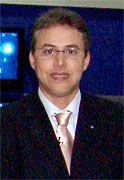 Mohamed Essaaidi is a Professor of Electrical & Computer Engineering at Abdelmalek Essaadi University, Morocco, an IEEE Senior Member, and the Chairman of the IEEE Morocco Section.
He has authored and co-authored several publications such as books and papers in international journals in the field of Electrical, Communication and Computer Technologies. He has been the Editor-in-Chief of International Journal on Information and Communication Technologies since 2007. He has also founded and he is the General Chair of the Mediterranean Microwave Symposium since the year 2000, Information and Communication Techngologies International Symposium in 2005 and 2007, and the Co-General Chair of International Conference on Multimedia Systems and Computing in 2009, 2011 and 2012. He has also been involved in the Organizing and Scientific Committees of other several international conferences held worldwide during the last decade.
Prof. Essaaidi holds four patents on antennas for very high data rate UWB and multi-band wireless communication networks and high resolution medical imaging systems.
He was also a member of the IEEE 802.16 Sponsor Ballot Pool of IEEE Standard Association that defined the technical specifications for WiMmax.
Moreover, he has supervised several PhD and Masters Theses and has been the principal investigator and the project manager for several international research projects.
We are witnessing a number of small and large breakthroughs in technologies and uses in the field of e-learning. Mobile learning, eBooks, games and gamification, analytics, augmented and virtual reality, collaboration, informal learning, massive classes, open education, etc. are just a few of these breakthroughs. These advances are slowly but firmly reshaping the world of education in multiple ways. This keynote talk intends to present the big picture and draw some conclusions about the current state of the art and future prospects.
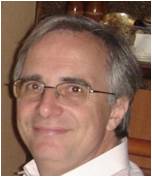 Carlos Delgado Kloos received the Ph.D. degree in Computer Science from the Technical University of Munich and in Telecommunications Engineering from the Technical University of Madrid. He is Full Professor of Telematics Engineering at the University Carlos III of Madrid, where he is the director of the Nokia Chair and of the GAST research group. He is also Vice-Rector of Infrastructures and Environment.
His main interests include Internet-based applications and in particular e-learning. He has been involved in more than 25 projects with European (Esprit, IST, @LIS, eContentPlus), national (Spanish Ministry, Region of Madrid) and bilateral funding. He has published more than 200 articles in national and international conferences and journals. He has further written a book and co-edited five. He is the Spanish representative at IFIP TC3 on Education and Senior Member of IEEE.